
Imagine having a conversation where every question you ask, no matter how detailed or complicated, gets answered clearly and quickly. That’s exactly what conversational AI that handles complex inquiries can do for you.
Whether you’re trying to solve a tough customer issue or need detailed information on the spot, this technology understands your needs and responds with precision. If you’ve ever felt frustrated by chatbots that give generic or incomplete answers, you’re about to discover a smarter way to communicate.
Keep reading to find out how this powerful AI can transform your experience and save you time—making every interaction smoother and more satisfying.
Credit: smartdev.com
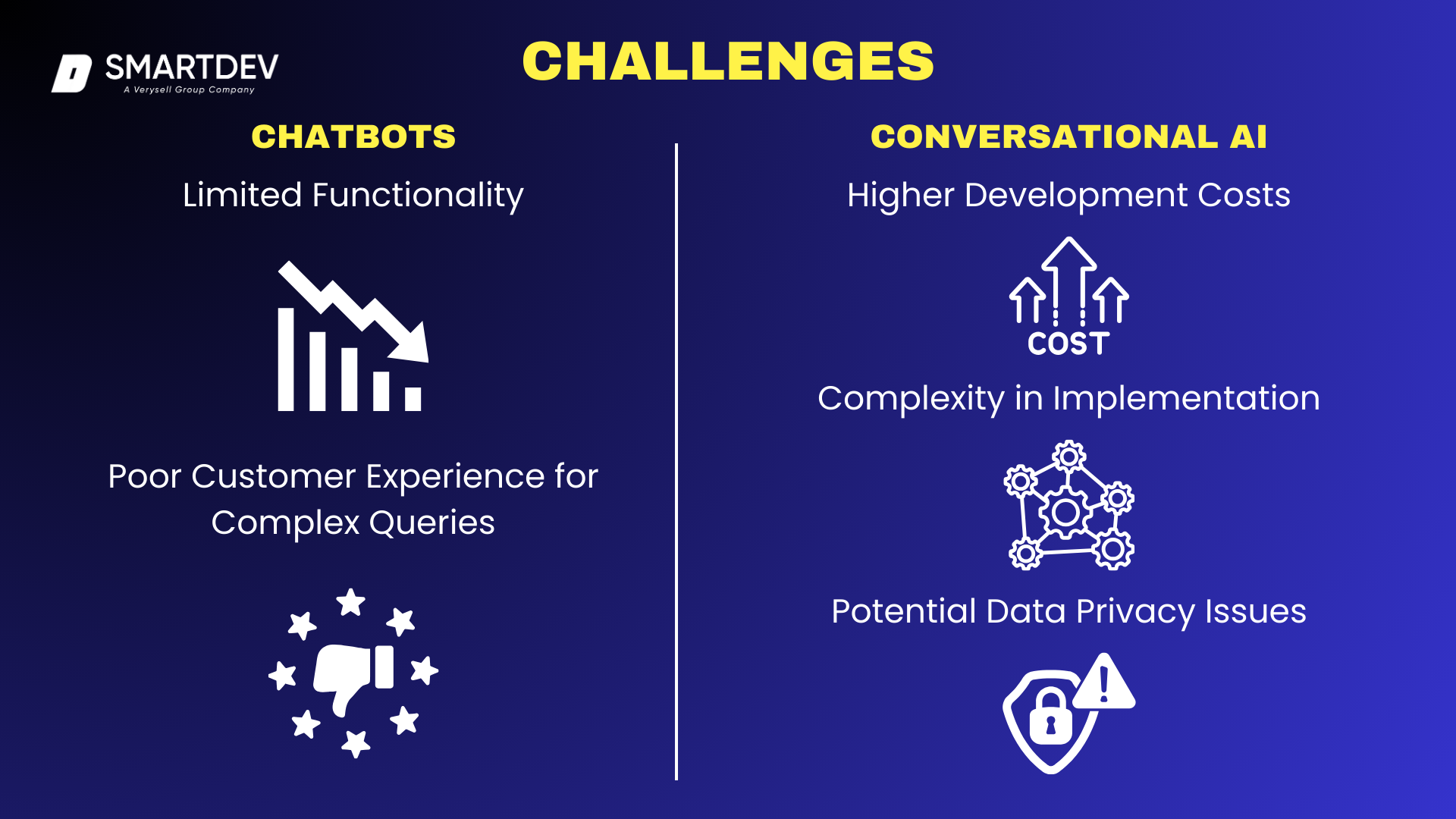
Complex Inquiry Challenges
Traditional chatbots often struggle with complex inquiries. They rely on simple pre-set rules and cannot understand deep meanings. This limits their ability to provide accurate answers.
Context awareness is crucial for handling ongoing conversations. Without it, chatbots may give irrelevant or repeated answers. They fail to remember previous user inputs or adjust responses accordingly.
Ambiguity in requests creates another problem. Simple bots cannot clarify unclear questions or ask follow-up questions. This leads to frustration and poor user experience.
| Challenge | Traditional Chatbot Limitation |
|---|---|
| Complex Inquiries | Can only answer simple, direct questions |
| Context Awareness | Cannot remember or use past conversation details |
| Ambiguity Handling | Fails to clarify vague or incomplete requests |
Core Features Of Advanced Ai
Natural Language Understanding lets AI grasp human words clearly. It reads sentences and finds meaning. This helps the AI reply in a way people expect. It understands slang and simple phrases easily.
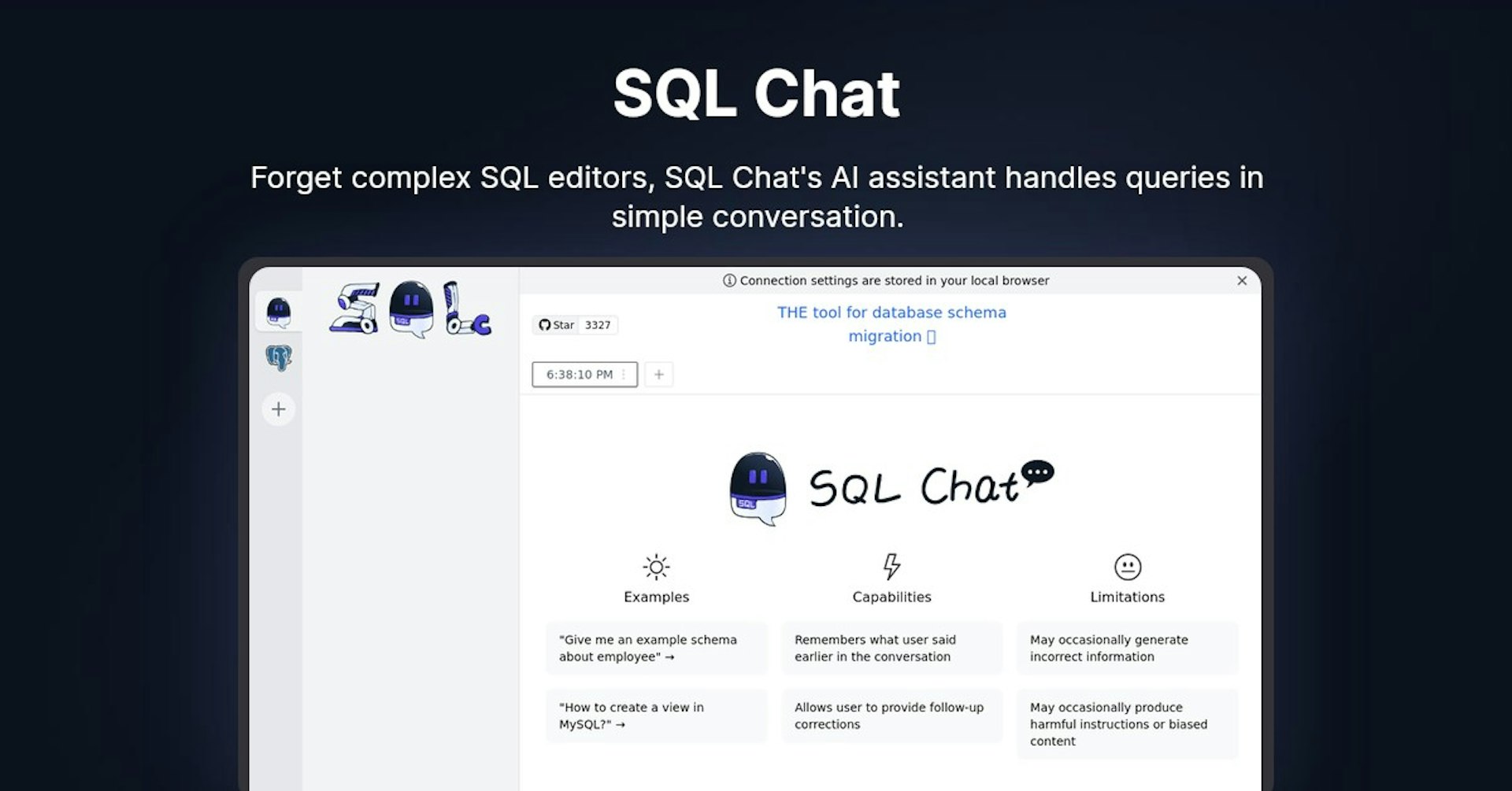
Multi-turn Conversations allow AI to chat like a human. The AI remembers what was said before. It can ask follow-up questions. This keeps the talk smooth and natural.
Intent Recognition and Prediction helps AI know what users want. It guesses the next step in a chat. This makes the answers more helpful and fast. AI learns from past talks to improve predictions.
Technologies Powering Ai Agents
Large Language Models understand and generate human-like text. They learn from vast amounts of data. This helps AI agents answer complex questions clearly and naturally.
Machine Learning and Reasoning allow AI to improve over time. They help agents think through problems step-by-step. This makes AI responses more accurate and logical.
Real-time Data Integration lets AI access the latest information. It connects to live sources for up-to-date answers. This feature is key for handling current, changing inquiries.
Credit: www.copilotly.com
Designing Ai For Support
Agentic Approach lets AI take charge of conversations. It helps AI understand user goals and decide actions. This method makes dialogues more natural and efficient. AI can ask questions or offer solutions by itself.
Contextual Workflow Integration means AI fits into existing work steps. It uses context from past chats and tasks to guide users well. This keeps conversations smooth and helps solve complex problems faster.
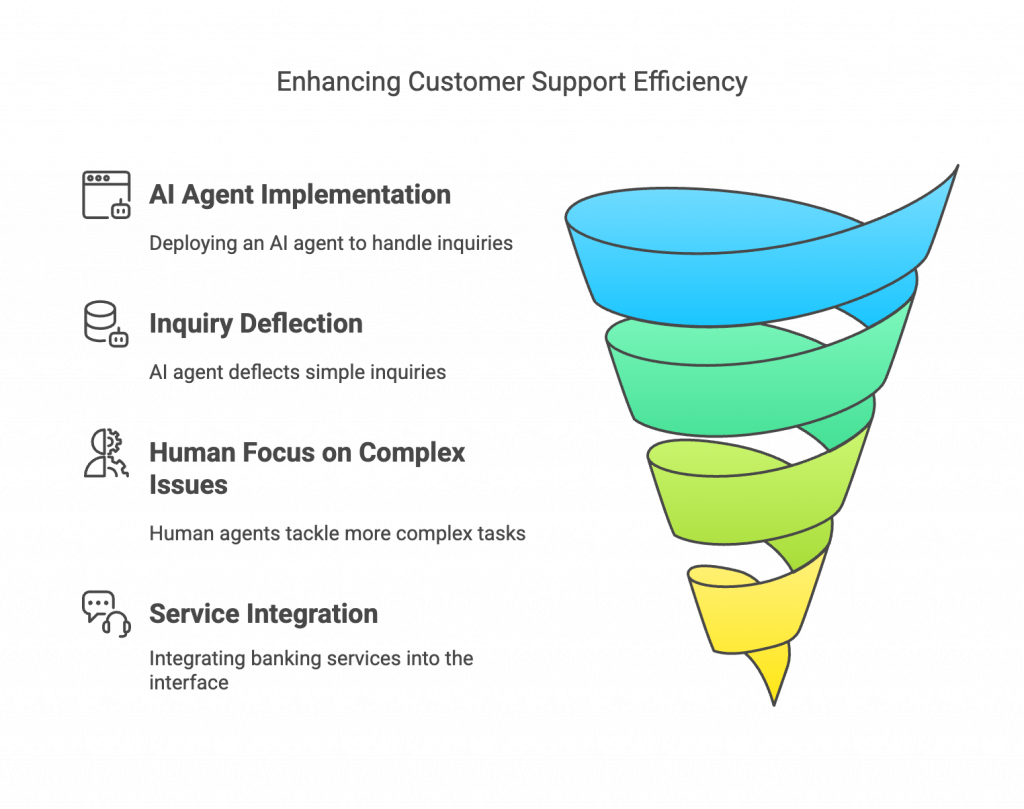
Balancing Automation and Human Handoff is key. AI handles simple to medium questions alone. For tough issues, it passes the talk to a human agent. This mix keeps users happy and gets answers right.
Benefits For Customer Service
Faster resolution times help customers get answers quickly. Complex questions are handled without long waits. This reduces frustration and saves time for both customers and agents.
Improved accuracy in responses means customers receive clear and correct information. The AI learns from many interactions to give better answers each time. Mistakes are less common, improving trust.
24/7 availability and scalability allow customers to get help anytime. No need to wait for business hours. The system can handle many questions at once, making it easy to serve more people without extra staff.
Case Studies And Platforms
Fin by Intercom helps businesses answer tough customer questions fast. It uses smart AI to understand what people ask. It learns from past chats to give better answers. Fin works well for complex issues like billing or technical support.
Amelia by SoundHound AI acts like a real helper. It talks naturally and solves problems step-by-step. Amelia can handle many tasks such as booking, troubleshooting, and account updates. It fits well in customer service and HR departments.
| Platform | Key Features | Best Use |
|---|---|---|
| Fin by Intercom | Learn from past chats, fast answers | Customer support, complex inquiries |
| Amelia by SoundHound AI | Natural talk, step-by-step problem solving | Customer service, HR tasks |
| Chatbase AI Agents | Custom chatbots, easy setup, data insights | Business automation, data-driven decisions |
Chatbase AI Agents lets you create custom chatbots without coding. It gives clear reports on chatbot performance. This helps businesses improve conversations and handle complex requests better.
Overcoming Implementation Hurdles
Training conversational AI on complex data sets needs careful planning. Diverse examples help the AI understand various questions. Large amounts of data improve its accuracy and response quality.
Ensuring privacy and security is very important. Data must be protected using strong encryption. User information should never be shared without permission.
Continuous learning keeps AI up to date. It learns from new data and user feedback. This helps handle new or changing questions better. Regular updates fix mistakes and improve performance.
Future Trends In Conversational Ai
Enhanced reasoning capabilities allow conversational AI to solve complex problems. These systems can follow logical steps and understand context better than before. This means they provide more accurate answers and handle detailed questions well.
Cross-channel support integration helps AI work across many platforms. Customers get consistent help whether on chat, email, or social media. This creates a smooth experience and saves time for users.
Personalized customer experiences use data to tailor responses. AI learns preferences and remembers past interactions. This makes conversations feel more natural and helpful to each person.
Credit: hellotars.com
How Callerr.nl Can Help You with Conversational Ai That Handles Complex Inquiries
Integrating Learning with Conversational AI for Complex Inquiries
Understanding the nuances of complex inquiry challenges and the core features of advanced AI is essential for anyone looking to harness conversational AI effectively. Practical learning opportunities often lie in exploring the technologies powering AI agents—such as Large Language Models and Natural Language Understanding—and how they contribute to truly intelligent agents capable of human-level intelligence and zero wait time responses.
When designing AI for support, focusing on measurable operational efficiency and seamless integration can help future-proof your customer service strategy. Engaging with case studies and platforms that demonstrate 90% call automation and 100x scalability provides invaluable insights into overcoming implementation hurdles.
- Study real-world applications to grasp immediate ROI potential
- Experiment with zero-code customization tools to accelerate deployment
- Analyze emotional cues for truly empathetic interactions
For those looking to deepen their expertise or explore next-generation conversational AI, resources like Callerr.nl offer a technically sophisticated yet accessible framework aligned with enterprise-ready solutions. Connecting with such platforms can serve as a practical guide on your journey toward autonomous excellence.
For additional guidance, consider reaching out to expert forums or contacting support teams specializing in conversational AI integration to discuss tailored learning paths.
Frequently Asked Questions
What Is The Smartest Conversational Ai?
The smartest conversational AI combines advanced reasoning, real-time data access, and deep research abilities. Google Gemini and Fin by Intercom lead in handling complex inquiries effectively.
Which Ai Can Handle Long Texts?
AI models like Google Gemini, OpenAI’s GPT-4, and Fin by Intercom handle long texts effectively. They process complex, lengthy content with high accuracy and maintain context throughout. These AI systems excel in deep understanding, continuous conversation, and detailed analysis, making them ideal for long-form text tasks.
What Are The Four Types Of Conversational Ai Bots?
The four types of conversational AI bots are support bots, social media bots, agent-assist bots, and RPA bots. Each serves unique roles in customer service, enhancing interaction, automation, and problem-solving efficiency.
Is Grok 3 Really The Best Ai?
Grok 3 excels in handling complex inquiries with advanced reasoning and problem-solving. It competes well but isn’t definitively the best AI.
What Is Conversational Ai That Handles Complex Inquiries?
It is AI designed to understand and respond to detailed, multi-layered questions effectively.
Conclusion
Conversational AI that manages complex inquiries changes how businesses interact. It understands detailed questions and provides clear answers fast. This technology saves time and improves customer satisfaction. Companies benefit from AI that learns and adapts over time. Choosing the right AI helps handle challenges smoothly.
As AI evolves, expect smarter, more helpful conversations ahead. The future of customer support looks more efficient and friendly.