
Are you struggling to pinpoint which leads deserve your immediate attention? What if you could have a smart assistant that listens, understands, and scores your leads instantly—just by talking?
Lead scoring AI with voice interaction capabilities is transforming how you qualify prospects, making your sales process faster and smarter. Imagine cutting through the noise and focusing only on leads most likely to convert, all while having natural, real-time conversations.
Ready to discover how this powerful technology can boost your sales success and save you precious time? Keep reading to unlock the future of lead qualification.
Credit: kong.ai
Ai Lead Scoring Basics
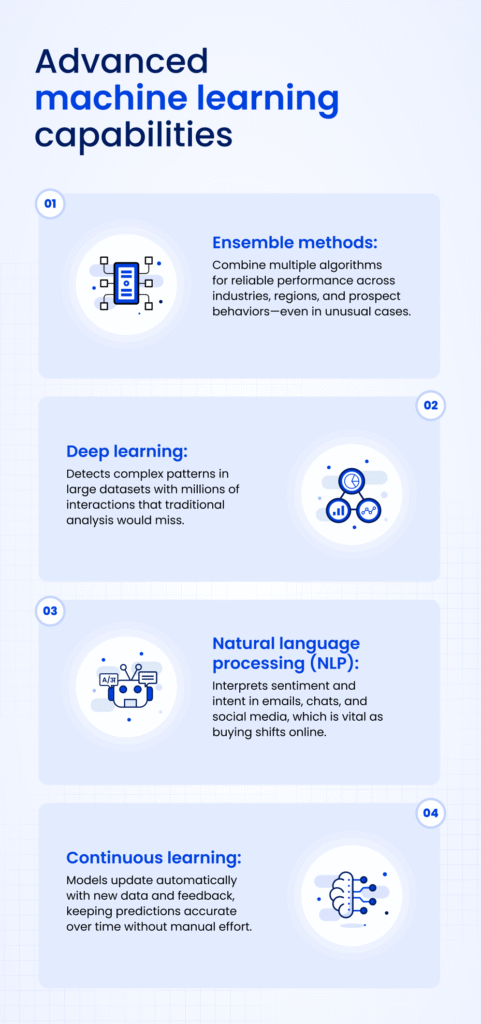
Machine learning models analyze data to predict lead quality. They learn from past sales and customer behavior. These models improve as they get more information.
Common data sources include CRM records, website visits, email responses, and social media activity. Voice interactions add real-time insights by capturing tone and intent.
| Traditional Scoring | AI-Driven Scoring |
|---|---|
| Uses fixed rules and simple points | Adapts with new data and patterns |
| Based on limited data types | Integrates many data sources including voice |
| Scores manually updated | Scores update automatically in real time |
Credit: www.leadsquared.com
Voice Interaction In Sales
Voice AI agents help sales teams by talking with customers naturally. These agents can ask questions and listen carefully. This creates a friendly and easy way to learn about leads.
Conversational interviews gather important details during real talks. This helps find the best leads quickly without long forms or waiting. Conversations feel smooth and personal.
Real-time engagement analysis checks how interested a lead is while talking. It tracks tone, speed, and words used. This data helps score leads instantly and focus on those ready to buy.
Combining Ai Lead Scoring With Voice
Automated lead qualification saves time by letting AI handle initial screening. AI listens to calls, reads messages, and scores leads based on interest and fit. This means sales teams focus on leads most likely to buy. The process is faster and more accurate than manual checks.
Real-time scoring during calls helps sales reps know a lead’s score as the conversation happens. AI analyzes voice tone, keywords, and responses instantly. Reps can adjust their approach based on the lead’s score and mood. This improves chances of closing deals and personalizes the talk.
| Feature | Benefit |
|---|---|
| Automated Lead Qualification | Saves time, improves accuracy, focuses on best leads |
| Real-Time Scoring During Calls | Instant feedback, better sales approach, higher deal success |
| Seamless CRM Integration | Keeps data updated, easy tracking, smooth sales workflow |
Seamless CRM integration means all lead data flows directly into the CRM system. No manual entry needed. Sales teams see updated scores and call notes right away. This keeps customer info organized and helps manage follow-ups better.
Boosting Sales Efficiency
Prioritizing high-value leads helps sales teams focus on prospects who matter most. AI analyzes data from calls and chats to score leads accurately. This means salespeople spend less time on less promising leads and more on those likely to buy.
Reducing manual efforts lets teams save time and avoid errors. Voice interaction features allow sales reps to get lead scores during conversations. No need to stop and check screens or enter data manually.
Improving conversion rates happens because sales teams connect with the right leads at the right time. AI identifies signals that show buying interest. This helps close deals faster and grow revenue.
Key Features To Look For
Predictive analytics uses past data to guess future lead quality. It helps sales teams focus on the most promising leads. This feature saves time and increases success rates.
Behavioral data analysis tracks how leads act online. It looks at clicks, page visits, and interactions. This data shows which leads are more interested and ready to buy.
Voice-driven feedback allows users to interact using speech. This makes lead scoring faster and easier. Voice commands can update lead status or add notes quickly.

Credit: elium.com
Implementation Strategies
Integrating AI lead scoring with voice interaction starts by connecting it to existing CRM and sales platforms. This ensures seamless data flow and real-time updates. Simple APIs help link voice systems to current tools without much hassle.
Training sales teams is key. They need to understand how AI scores leads and how voice input changes customer interaction. Role-playing and practical demos can build confidence and skills quickly.
Monitoring the system regularly helps catch any issues early. Track lead score accuracy and voice interaction quality. Use feedback loops to improve both AI models and team performance for better results.
Future Trends
Voice AI is improving fast. It now understands speech better and can join natural talks with leads. This helps sales teams score leads more accurately by hearing tone and mood.
Predictive models use data to guess which leads might buy. New models learn from voice talks and past results. They get smarter and give better scores.
More industries are using voice AI for lead scoring. From tech to retail, many find it saves time and finds good leads faster. Expect this trend to grow soon.
How Callerr.nl Can Help You with Lead Scoring Ai With Voice Interaction Capabilities
Practical Learning Opportunities in AI Lead Scoring with Voice Interaction
For those looking to deepen their understanding of AI lead scoring combined with voice interaction, it’s crucial to explore hands-on learning that bridges theory with real-world application. Focusing on implementation strategies and future trends, practitioners can gain insights into how autonomous excellence and human-level intelligence translate into measurable operational efficiency.
Engaging with platforms that offer seamless integration and zero-code customization provides an immediate sense of how next-generation AI redefines standards in sales efficiency. Experimenting with voice-enabled lead scoring systems helps uncover the nuances of natural language understanding and emotional cues, fostering truly empathetic interactions that drive instant scale.
- Participate in workshops or webinars focused on combining AI lead scoring with voice to understand practical deployment.
- Leverage sandbox environments to test 90% call automation scenarios and analyze outcomes.
- Study case examples demonstrating 100x scalability and immediate ROI from generative AI-powered agents.
For additional resources or guidance, exploring thought leadership at Callerr.nl can provide valuable perspectives grounded in enterprise-ready, technically sophisticated solutions.
Frequently Asked Questions
What Is Lead Scoring Ai With Voice Interaction?
Lead scoring AI rates potential customers using data from voice-based conversations.
How Does Voice Interaction Improve Lead Scoring Accuracy?
Voice data adds real-time insights, making lead scoring more precise and relevant.
Can Lead Scoring Ai With Voice Work In Real-time?
Yes, it analyzes live voice interactions to score leads instantly.
What Benefits Does Voice-enabled Lead Scoring Bring To Sales Teams?
It saves time, enhances lead quality, and boosts sales efficiency.
Is Voice Interaction Lead Scoring Easy To Integrate With Crm?
Most systems support easy integration to combine voice data with CRM records.
Conclusion
Lead scoring AI with voice interaction improves how businesses find good leads. It listens, understands, and scores leads in real time. This helps sales teams focus on the best prospects faster. Voice AI makes the process natural and easy for customers.
Using this technology boosts efficiency and saves time. Companies gain clearer insights into who is ready to buy. Adopting voice-enabled lead scoring can enhance sales efforts significantly. The future of lead scoring is smart, simple, and voice-driven.