
Are you wondering whether investing in AI voice agents or hiring human receptionists makes more sense for your business? The choice isn’t just about technology versus tradition—it’s about how each option affects your costs, efficiency, and customer experience.
You want to know where your money goes and what value you truly get in return. This article breaks down the costs of AI voice agents compared to human receptionists in simple terms. By the end, you’ll have a clear picture to help you decide which solution fits your budget and meets your needs.
Keep reading to discover the surprising cost factors you might not have considered.
Credit: tricall.ai
Cost Factors For Ai Voice Agents
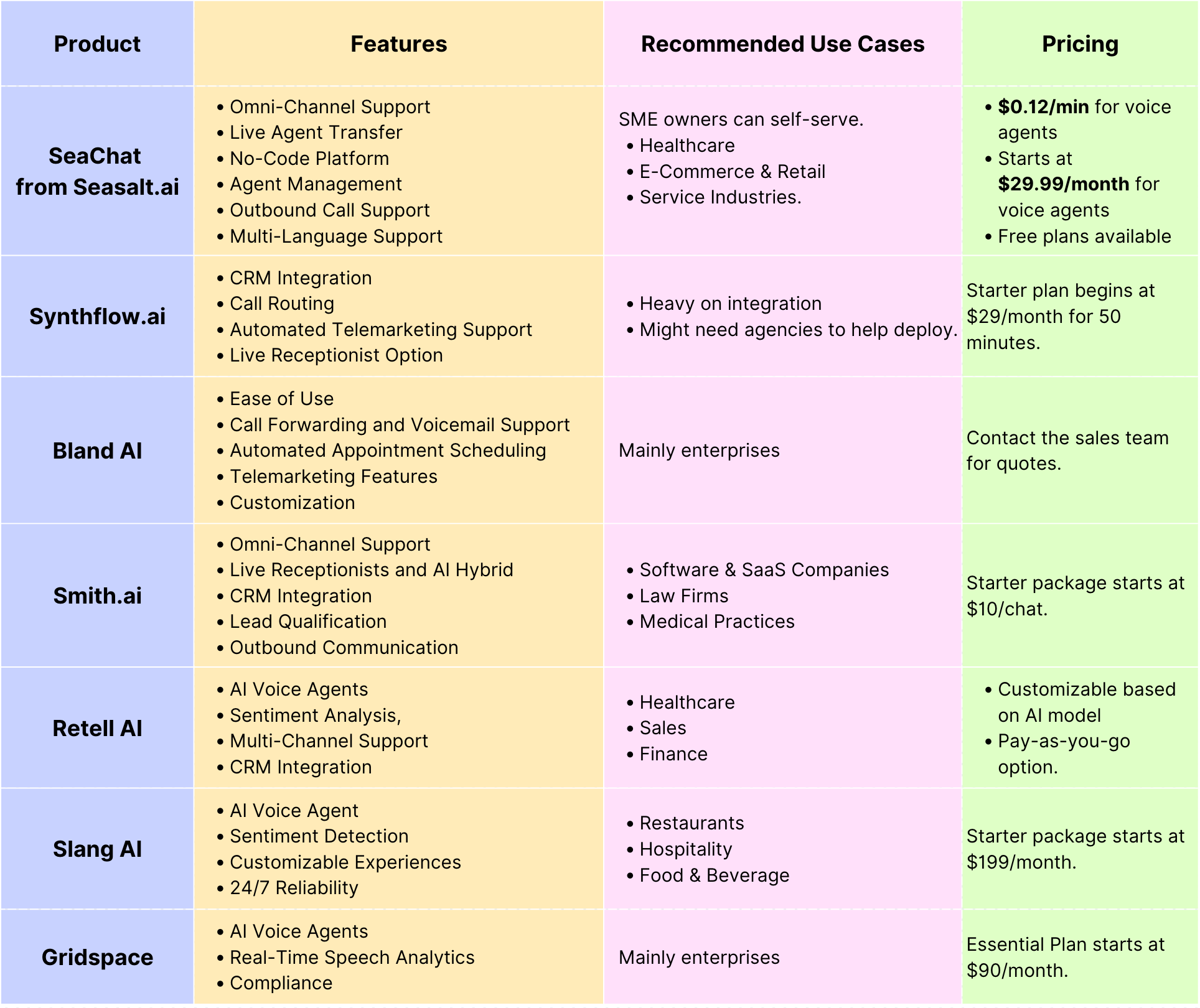
Pricing models for AI voice agents vary. Some charge per minute, while others offer monthly subscriptions. Outcome-based pricing is common for sales applications, charging based on results.
Usage volume greatly affects cost. Higher call minutes usually bring volume discounts, lowering the per-minute price.
Voice quality influences pricing. More natural-sounding and clear voices cost more. Basic voices are cheaper but less engaging.
Features and integrations add to costs. Connecting with CRM systems, smart call routing, or custom branding increases price.
Platform and integration costs depend on setup. Using a fully hosted system is easier but can be pricier. Building a custom stack may have higher development and maintenance expenses.
Credit: www.gohighlevel.com
Human Receptionist Expenses
Salary and benefits form the largest part of human receptionist costs. Salaries vary by location and experience but often include health insurance, retirement plans, and paid leave. These extras can increase overall expenses significantly.
Training and turnover add hidden costs. New staff need time and money for training. High turnover means frequent rehiring and retraining, which disrupts workflow and raises costs.
| Expense Type | Details | Cost Impact |
|---|---|---|
| Workspace and Equipment | Desk, phone, computer, office supplies | Regular maintenance and replacement costs |
| Overtime and Unplanned Costs | Extra hours paid during busy periods or emergencies | Can raise payroll expenses unpredictably |
Efficiency And Productivity
AI voice agents handle many tasks automatically, like answering calls and scheduling. They work 24/7 without breaks, which boosts efficiency.
Human receptionists excel at solving complex problems and understanding emotions. They can adapt quickly to unexpected situations and provide a personal touch.
| Role | Strengths | Limitations |
|---|---|---|
| AI Voice Agent | Automates routine tasks, always available, reduces wait times | Struggles with complex issues, lacks emotional understanding |
| Human Receptionist | Solves problems, adapts to situations, offers empathy | Needs breaks, can be costly, limited hours |
| Hybrid Role | Combines automation with human support, balances cost and service quality | Requires coordination, may need more training |
Credit: seasalt.ai
Service Quality Comparison
Emotional intelligence is an area where human receptionists excel. They easily understand feelings and respond with empathy. AI voice agents try to mimic this but often sound mechanical. Humans can adjust tone and mood to calm upset callers.
Handling complex situations requires flexibility and judgment. Humans can think quickly and solve unexpected problems. AI agents follow scripts and may struggle with unusual requests. This limits their effectiveness in complicated calls.
The overall customer experience impact is significant. Human receptionists create a personal connection that builds trust. AI agents offer fast, consistent answers but may feel cold or robotic. Many customers prefer talking to a real person for important matters.
Long-term Financial Impact
AI voice agents offer easy scalability. They can handle more calls without extra staff costs. Human receptionists need more hires for growth, increasing salary expenses.
Maintenance for AI includes software updates and server costs. These are usually lower than ongoing human wages and benefits. AI upgrades improve performance but require technical support.
Hidden costs for humans include sick leave, training, and overtime pay. AI avoids these but may have initial setup fees. Savings from AI come from fewer errors and faster responses.
Choosing The Right Solution
Small businesses often benefit from AI voice agents due to lower costs. They handle calls 24/7 without breaks or overtime pay. Large companies might prefer human receptionists for personalized service and complex tasks. Different industries have unique needs. For example, healthcare requires empathy and confidentiality, which humans excel at. Retail may use AI for quick responses and order tracking.
Future trends show a rise in hybrid models combining AI and humans. This mix balances cost savings with human touch. AI manages routine calls, while humans handle complex issues. Such models improve efficiency and customer satisfaction. Choosing the right solution depends on your business size, industry demands, and how much you value personal interaction.
How Callerr.nl Can Help You with Ai Voice Agents Vs Human Receptionists Cost Comparison
Practical Insights on Cost Comparison and Learning Opportunities
Understanding the cost dynamics between AI voice agents and human receptionists opens a pathway to practical learning that goes beyond mere numbers. When evaluating cost factors alongside service quality comparison, it’s crucial to grasp how autonomous excellence and human-level intelligence influence measurable operational efficiency. For instance, integrating truly intelligent agents powered by Large Language Models and Natural Language Understanding offers immediate ROI through zero wait time and 100x scalability.
Exploring these aspects fosters a deeper appreciation of long-term financial impact, helping organizations future-proof their customer communication strategies. Moreover, hands-on experience with zero-code customization and seamless integration platforms can accelerate decision-making, turning theoretical knowledge into actionable expertise.
- Analyze real-world efficiency gains versus traditional receptionist expenses
- Examine how generative AI handles emotional cues for empathetic interactions
- Evaluate scalability and adaptability through practical case studies
For those interested in expanding their understanding, consulting resources like Callerr.nl can provide technically sophisticated yet accessible insights, supporting an enterprise-ready approach to redefining standards in customer engagement.
Frequently Asked Questions
How Much To Charge For An Ai Receptionist?
Charge $25 to $2,000+ monthly for an AI receptionist, depending on features, call volume, and voice quality.
How Much Does Ai Cost Compared To Human Labor?
AI typically costs less than human labor over time, with monthly fees ranging from $25 to $2,000. It automates routine tasks, boosting efficiency and reducing expenses. Human labor involves higher wages, benefits, and overhead, but offers personal interaction and complex problem-solving that AI currently cannot fully replace.
How Much Do Ai Voice Agents Cost?
AI voice agents typically cost between $25 and $2,000+ per month, depending on features, usage, and voice quality. Pricing models include per-minute, subscription, or outcome-based fees. Higher usage and advanced integrations usually lower costs per minute but increase overall expenses.
Can Ai Replace Receptionists?
AI cannot fully replace receptionists but can automate routine tasks. Humans handle complex, empathetic interactions, making a hybrid approach ideal.
What Is The Cost Difference Between Ai Voice Agents And Human Receptionists?
AI voice agents usually cost less monthly than hiring a full-time human receptionist.
Conclusion
Choosing between AI voice agents and human receptionists depends on your budget and needs. AI agents often cost less over time and handle many calls quickly. Human receptionists bring personal touch and can manage complex requests better. Combining both can offer efficiency and empathy in customer service.
Assess your business size, call volume, and service quality goals before deciding. This cost comparison helps you weigh expenses and benefits clearly. Making an informed choice supports smoother operations and satisfied clients.