
Assisted living facilities across the country are facing an unprecedented workforce crisis that threatens the quality of care residents receive. Staffing shortages, high turnover rates, and difficulty recruiting qualified caregivers have become the number one concern for senior living leaders nationwide. These challenges affect everything from daily care operations to resident satisfaction and financial stability.

The root causes are complex and interconnected. Burnout among caregivers, competitive hiring from hospitals and home health agencies, and gaps in leadership positions create a cycle that’s difficult to break. When staff members leave, the remaining team faces heavier workloads, which leads to more departures.
We’ve identified the most pressing staffing challenges facing assisted living communities today and practical solutions that work. By understanding these barriers and implementing targeted strategies, facilities can build stronger, more resilient teams that provide the consistent, quality care residents deserve.
Key Takeaways
- Assisted living facilities face critical staffing shortages that directly impact care quality and operational stability
- High turnover, recruitment difficulties, and employee burnout are the primary workforce challenges requiring immediate attention
- Practical solutions including flexible scheduling, interim leadership, and wellness initiatives can help overcome staffing barriers
Understanding and Overcoming Assisted Living Staffing Challenges

Assisted living facilities face interconnected workforce issues that directly affect care quality and operational stability. We examine the core staffing challenges affecting these communities and the practical approaches that address recruitment difficulties, employee wellness, technological integration, and the maintenance of quality care standards.
High Turnover Rate and Burnout
High turnover rates in assisted living stem primarily from burnout among caregivers and nurses who face emotionally demanding work environments. We see turnover disrupting continuity of care while simultaneously increasing recruitment and training costs for facilities.
Burnout develops when staff manage heavy workloads without adequate support systems. Employees often juggle multiple residents with complex needs, irregular schedules, and limited recovery time between shifts. This combination leads to physical exhaustion and emotional depletion.
The financial impact of high turnover extends beyond recruitment expenses. We must account for lost productivity during training periods, decreased quality of care during transitions, and the strain placed on remaining staff members who cover vacant positions. Leadership turnover particularly affects facility operations since executive directors and directors of nursing provide essential stability and guidance.
Key contributors to turnover include:
- Insufficient recognition and appreciation
- Limited career advancement opportunities
- Inflexible scheduling practices
- Inadequate staffing levels
- Lack of mentorship programs
Staff Shortages and Recruitment Barriers
Staff shortages in assisted living result from a limited talent pool shared among hospitals, home health agencies, and other healthcare providers. We compete for qualified healthcare professionals in an increasingly constrained labor market.
Traditional recruitment methods often fail to reach qualified candidates. Job boards alone cannot address the depth of staffing needs across caregiver, nursing, and leadership positions. The shortage affects both entry-level caregivers and specialized roles requiring clinical expertise.
Geographic factors compound recruitment difficulties. Rural and suburban facilities face particularly acute challenges attracting candidates who prefer urban employment opportunities. Wage competition from hospitals and skilled nursing facilities further limits the available workforce for assisted living communities.
We find that expanding recruitment strategies beyond conventional approaches yields better results. Partnerships with nursing programs, referral incentive programs, and healthcare staffing firms provide access to broader candidate networks. Highlighting facility culture, mission, and growth opportunities helps differentiate communities in competitive markets.
Staff Retention Strategies and Well-Being
Staff retention requires comprehensive approaches that address both professional growth and personal wellness. We implement career pathways that allow caregivers and nurses to advance within the organization through defined progression steps.
Employee wellness initiatives must address physical, emotional, and mental health needs. Employee assistance programs provide confidential counseling and support services. Regular check-ins between staff and leadership create opportunities to identify concerns before they escalate to resignation.
Effective retention strategies include:
| Strategy | Implementation | Impact |
|---|---|---|
| Flexible scheduling | Self-scheduling systems, shift swaps | Reduces work-life conflict |
| Professional development | Certification support, tuition assistance | Increases skill levels and loyalty |
| Recognition programs | Performance bonuses, appreciation events | Improves staff morale |
| Mentorship | Pairing experienced with new staff | Accelerates competency development |
We see that manageable workloads directly correlate with staff well-being. Appropriate staffing ratios prevent the cascading effect where shortages increase burden on present employees, leading to additional departures. Benefits packages that include competitive wages, health insurance, and retirement options strengthen retention efforts.
Impact on Personalized Care and Resident Experience
Staffing challenges directly affect our ability to deliver personalized care that meets evolving resident expectations. Consistent staff assignments allow caregivers to understand individual preferences, health patterns, and emotional needs.
High turnover disrupts the relationships residents build with their caregivers. We observe increased anxiety and confusion among residents when familiar faces disappear and new staff members require time to learn their routines. This disruption particularly affects residents with cognitive impairments who rely on consistency.
Modern residents and families expect hospitality-driven service alongside clinical care. These elevated expectations require staff training in both healthcare competencies and customer service skills. Inadequate staffing levels force employees to prioritize essential tasks over the personalized attention that distinguishes quality assisted living.
Staff shortages limit our capacity to offer engaging activities and social programs. When caregivers focus solely on basic care tasks, residents miss opportunities for enrichment that support their quality of life and functional abilities.
Role of Technology in Staffing Solutions
Technology provides tools that help us address staffing challenges through improved efficiency and communication. Scheduling software optimizes shift coverage while accommodating staff preferences and reducing administrative time.
Electronic health records streamline documentation, allowing caregivers to spend more time on direct resident care. We use monitoring systems and alert technologies to extend staff coverage across larger areas without compromising safety or response times.
Technology applications in staffing:
- Mobile communication platforms for instant team coordination
- Automated medication management systems
- Telehealth services for remote clinical consultation
- Workforce analytics for predictive scheduling
However, we recognize that technology complements rather than replaces human interaction. Assisted living remains a relationship-centered care model where personal connections drive resident satisfaction and outcomes. Technology should reduce administrative burdens and repetitive tasks while preserving face-to-face care time.
Training staff on new technologies requires upfront investment but yields long-term efficiency gains. We balance technological solutions with the interpersonal care that residents expect and deserve.
Staff Morale, Professional Development, and Compliance
Staff morale influences both retention and care quality in measurable ways. We create positive work environments through transparent communication, shared decision-making, and recognition of employee contributions.
Professional development opportunities demonstrate organizational investment in employee growth. Training programs that expand clinical skills, leadership capabilities, and specialized certifications increase staff competence and confidence. These programs also support compliance with regulatory requirements for ongoing education.
Compliance standards for staffing ratios, training requirements, and documentation practices affect our operational approaches. We maintain adequate staffing levels to meet regulatory minimums while striving for ratios that support quality care delivery. Background checks, certification verification, and competency assessments protect resident safety.
Leadership development programs prepare frontline staff for supervisory roles, creating internal promotion pathways. Mentorship from experienced healthcare professionals accelerates skill development among new employees. We find that cultures emphasizing continuous learning improve both staff morale and compliance outcomes.
Comparing Assisted Living to Nursing Homes
Assisted living and nursing homes face similar staffing challenges but differ in care intensity and regulatory requirements. Nursing homes provide skilled nursing care for residents with complex medical needs, requiring registered nurses and licensed practical nurses on staff around the clock.
Assisted living focuses on personal care assistance and supportive services for residents who need help with daily activities but not constant medical supervision. Our staffing models emphasize caregivers over clinical staff, though many communities employ nurses for medication management and care coordination.
Key differences in staffing:
Frequently Asked Questions
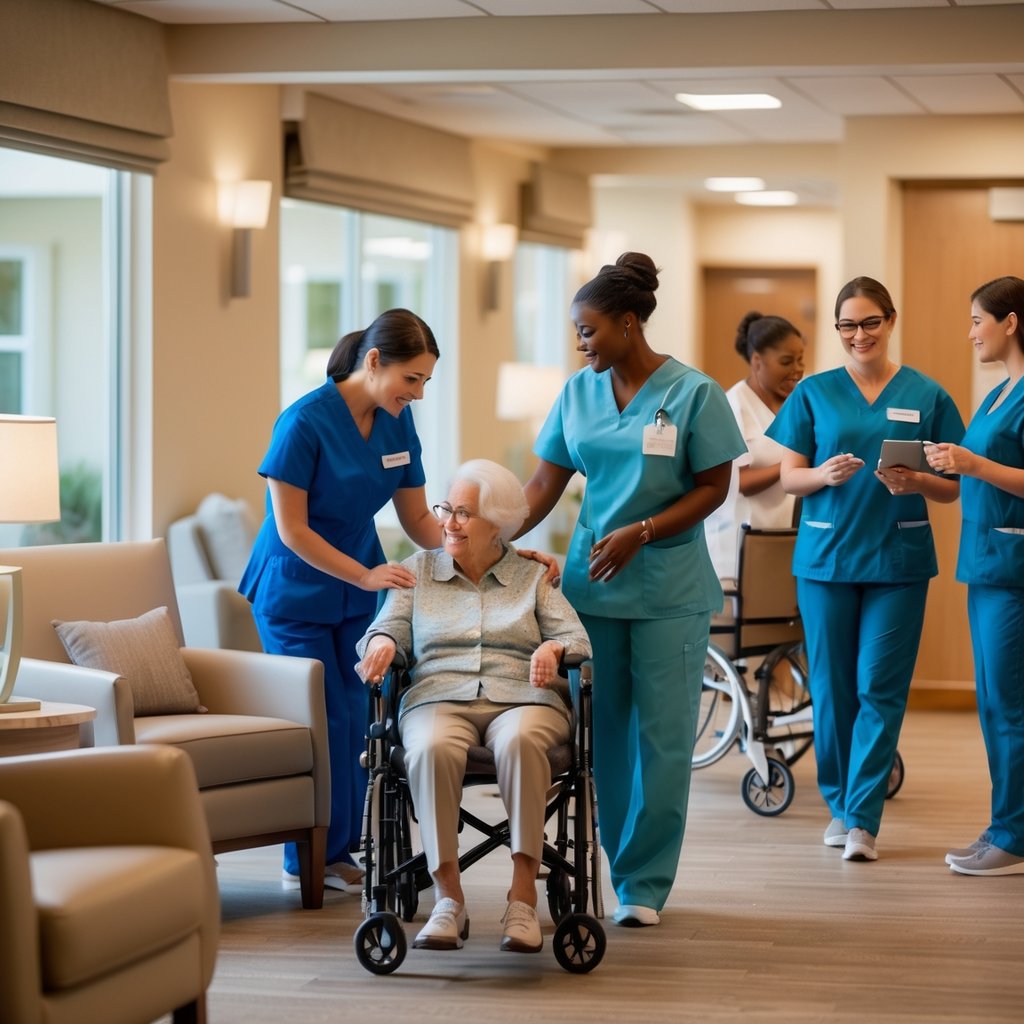
Addressing staffing challenges in assisted living requires understanding the specific factors that drive turnover, influence recruitment success, and shape workforce development. Compensation structures, demographic shifts, and regulatory compliance all play distinct roles in workforce stability.
How can assisted living facilities address high turnover rates among staff?
We address high turnover by creating clear career pathways that show staff how they can advance within our organization. When employees see opportunities for growth beyond their current role, they are more likely to remain long-term.
Flexible scheduling options help staff balance their work responsibilities with personal obligations. We implement self-scheduling systems where appropriate and offer shift-swapping capabilities to reduce burnout.
Recognition programs that acknowledge both clinical excellence and compassionate care reinforce the value we place on our team members. Regular check-ins with leadership allow us to identify concerns before they lead to resignation.
Mentorship programs pair experienced staff with newer employees to provide guidance and support during the adjustment period. This relationship building strengthens team cohesion and improves job satisfaction across all levels.
What strategies are effective in recruiting and retaining skilled staff in assisted living environments?
We expand our recruitment efforts beyond traditional job boards by partnering with local nursing programs and vocational schools. These partnerships create pipelines of qualified candidates who are already familiar with our organization before they graduate.
Employee referral incentives encourage our current staff to recommend qualified candidates from their professional networks. Staff members who refer successful hires often receive bonuses or additional paid time off.
We highlight our community’s culture and mission in all recruitment materials to attract candidates who align with our values. Showcasing testimonials from current employees provides authentic insight into our work environment.
Competitive benefits packages that include health insurance, retirement contributions, and continuing education support make our positions more attractive. We regularly benchmark our offerings against other healthcare employers in our region.
Onboarding programs lasting 60 to 90 days ensure new hires receive comprehensive training and ongoing support. We assign preceptors to guide new employees through their first months on the job.
Which training and professional development opportunities are essential for improving staff performance in assisted living settings?
Clinical skills training must cover dementia care, medication management, fall prevention, and emergency response protocols. We conduct these trainings quarterly to ensure staff maintain current competencies.
Hospitality-focused service training equips our team to meet resident expectations for personalized care and engagement. This includes communication techniques, conflict resolution, and person-centered care approaches.
Leadership development programs prepare frontline staff for supervisory and management roles within our organization. We offer certifications in areas like gerontology, assisted living administration, and nursing leadership.
Cross-training opportunities allow staff to learn multiple roles within the community, which increases operational flexibility. Certified nursing assistants might receive training in activities coordination or dietary services.
We provide access to continuing education credits through online platforms and conference attendance. This investment in professional growth demonstrates our commitment to staff development.
How do changing demographics impact staffing needs within assisted living communities?
The aging baby boomer population is increasing demand for assisted living services, which requires us to expand our workforce proportionally. This demographic shift creates pressure to recruit and train staff more rapidly than in previous decades.
Today’s residents often enter assisted living with higher acuity needs than previous generations. We need staff with advanced clinical skills to manage complex medication regimens, chronic conditions, and specialized care requirements.
Families and residents now expect technology integration, from electronic health records to virtual communication platforms. Our staff training must include digital literacy components to meet these evolving expectations.
Cultural diversity among both residents and potential staff members requires us to develop multilingual capabilities and cultural competency training. We actively recruit from diverse communities to better serve our resident population.
What role does compensation play in mitigating the staffing challenges faced by assisted living facilities?
Competitive base pay is the foundation of any successful retention strategy, as assisted living facilities compete with hospitals and home health agencies for the same talent pool. We conduct annual market analyses to ensure our wages meet or exceed regional averages for comparable positions.
Shift differentials for evening, night, and weekend shifts help us maintain adequate coverage during less desirable hours. These additional payments typically range from $1 to $3 per hour depending on the shift.
Performance-based bonuses reward staff who consistently meet quality metrics and demonstrate exceptional resident care. We tie these incentives to measurable outcomes like resident satisfaction scores and safety indicators.
Student loan repayment assistance and tuition reimbursement programs address the financial burdens that many healthcare workers carry. We offer up to $5,000 annually for employees pursuing relevant degrees or certifications.
Retention bonuses paid at key intervals, such as one-year and three-year anniversaries, provide additional financial incentives to remain with our organization. These payments acknowledge the value of experienced staff who understand our residents and systems.
How can assisted living providers ensure compliance with evolving staffing regulations?
We monitor state and federal regulatory changes through membership in industry associations and regular consultation with healthcare attorneys. This proactive approach allows us to implement necessary changes before compliance deadlines.
Documentation systems must track staff credentials, training completion, and continuing education hours to demonstrate regulatory compliance during surveys. We use digital platforms that send automatic alerts when certifications approach expiration.
Minimum staffing ratios vary by state and sometimes by resident acuity levels within our community. We maintain scheduling systems that flag potential ratio violations before shifts begin.
Background check requirements for all staff members must meet state-specific standards, which may include fingerprinting and abuse registry searches. We repeat these checks at intervals required by our licensing authority.
We designate compliance officers or committees to oversee adherence to staffing regulations and conduct internal audits. These individuals receive specialized training in regulatory requirements and survey preparation.