
Imagine having a smart assistant that not only understands what you say but also how you feel. Enterprise Conversational AI with Sentiment Analysis does exactly that.
It helps your business connect with customers on a deeper level by reading emotions behind their words. This technology can transform your customer service, boost satisfaction, and drive better results. If you want to learn how to make your conversations smarter and more impactful, keep reading.
Your next breakthrough in customer interaction starts here.
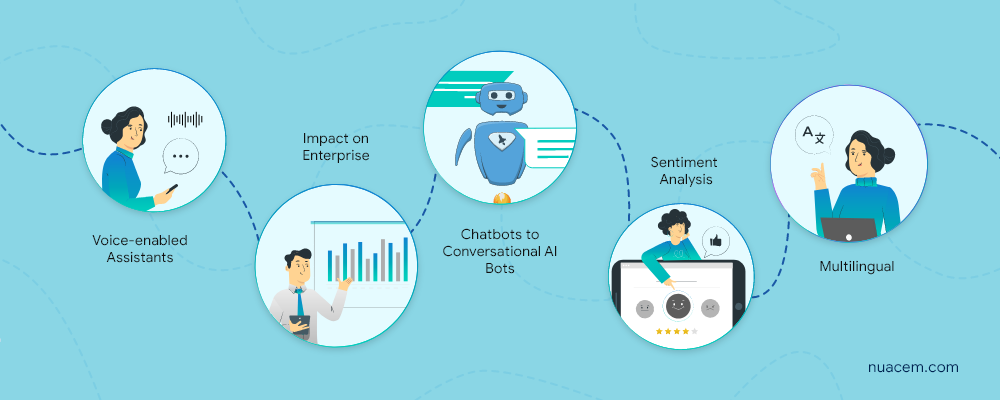
Credit: nuacem.com
Benefits Of Conversational Ai
Conversational AI helps businesses talk with customers easily. It makes chats feel more natural and friendly. Customers get help that fits their mood because of sentiment analysis. This means the system understands if someone is happy or upset.
Response time gets much faster. Customers do not wait long for answers. Quick replies keep people happy and engaged. This speed is important for good service.
Support teams can help many people at once. Conversational AI can handle many chats without getting tired. It helps scale operations without adding more staff. This saves money and time.
Role Of Sentiment Analysis
Sentiment analysis helps detect how customers feel. It reads words and tone to find emotions like happiness, anger, or sadness. This helps companies understand their customers better.
By knowing feelings, conversations can be personalized. This means replies fit the customer’s mood and needs. It makes chats more friendly and helpful.
Better understanding and personal talks improve customer satisfaction. Happy customers are more likely to trust and keep using a service. Sentiment analysis helps make every conversation count.
Integrating Ai With Sentiment Detection
AI systems use several technical methods to detect emotions. These include natural language processing, machine learning models, and voice tone analysis. Combining these helps AI understand user feelings better.
For accurate sentiment detection, large datasets with labeled emotions are needed. Data must cover many languages and cultural contexts. This variety helps the AI learn different ways people express feelings.
| Challenges | Solutions |
|---|---|
| Understanding slang and informal speech | Use constantly updated language models |
| Detecting sarcasm or mixed emotions | Combine text and voice analysis for context |
| Handling noisy or unclear input | Improve data quality and preprocessing |
Boosting Engagement Metrics
Increasing user retention is key to better engagement. Conversational AI with sentiment analysis helps understand user feelings in real time. This allows quick responses to keep users interested. Personalized conversations make users feel valued and understood. Happy users return more often, boosting retention rates.
Driving sales and conversions becomes easier with smart chatbots. They guide users gently towards buying decisions by recognizing emotions. Positive feelings lead to trust, which increases chances of purchase. Chatbots can suggest products based on user mood and preferences. This creates a smooth buying journey for customers.
Gathering actionable insights helps businesses grow. Sentiment analysis collects data on user opinions and emotions. This data shows what users like or dislike. Companies can improve services and products based on real feedback. Insights from conversations help make smarter business choices.
Use Cases In Enterprises
Customer Support Automation uses AI to answer questions fast. It understands customer feelings to respond kindly. This helps reduce wait times and makes users happy. AI chatbots work 24/7 and handle many chats at once.
Sales and Marketing teams use sentiment analysis to find positive customer moods. It helps them send better offers and messages. AI can spot trends in what customers like or dislike. This guides smart decision-making.
Employee Experience improves by tracking how workers feel. AI listens to feedback in chats and emails. It shows areas where employees need support or training. Happier employees mean better work and less stress.

Credit: yellow.ai
Future Trends In Conversational Ai
Natural Language Processing (NLP) is getting better at understanding human words and feelings. It helps machines read and respond like people do. This makes conversations with AI more natural and helpful.
Multimodal Interaction means using voice, text, images, or even gestures together. This helps users talk to AI in many ways. It makes AI more flexible and easy to use for different needs.
Ethical AI and Privacy focus on keeping data safe and fair. AI must respect user privacy and avoid bias. This builds trust and makes people feel comfortable using AI tools.
Credit: developers.zoom.us
How Callerr.nl Can Help You with Enterprise Conversational Ai With Sentiment Analysis
Practical Learning in Enterprise Conversational AI with Sentiment Analysis
For those looking to deepen their understanding of enterprise conversational AI combined with sentiment analysis, hands-on experience is invaluable. Exploring the integration of AI with sentiment detection not only sharpens technical skills but also reveals how emotional cues directly influence engagement metrics. By experimenting with next-generation models—such as Large Language Models and natural language understanding frameworks—you can witness firsthand how truly intelligent agents achieve autonomous excellence and measurable operational efficiency.
Start by setting up projects that simulate real-world enterprise use cases, focusing on zero-code customization to accelerate development timelines from months to days. This approach helps in grasping the nuances of boosting customer interactions through human-level intelligence and truly empathetic interactions. Leveraging platforms known for seamless integration and 100x scalability offers an immediate ROI perspective, which is critical for any enterprise-ready solution.
- Experiment with sentiment-driven dialogue flows
- Analyze engagement metrics to refine AI responses
- Incorporate generative AI to enhance conversational depth
For further insights or guidance on implementing these concepts, consulting with experts specializing in future-proof conversational AI solutions can be a useful resource.
Frequently Asked Questions
What Is Enterprise Conversational Ai?
Enterprise Conversational AI is software that helps businesses talk with customers using chat or voice.
How Does Sentiment Analysis Improve Ai Conversations?
Sentiment Analysis detects feelings in messages to make replies more helpful and friendly.
Why Use Sentiment Analysis In Business Chatbots?
It helps understand customer mood, leading to better support and happier customers.
Can Conversational Ai Handle Multiple Languages?
Yes, many systems support several languages to serve global customers easily.
What Industries Benefit Most From Conversational Ai With Sentiment Analysis?
Retail, healthcare, finance, and customer service gain better engagement and faster help.
Conclusion
Enterprise conversational AI with sentiment analysis helps businesses understand customer feelings. It improves communication and supports faster, smarter decisions. This technology makes customer service more personal and effective. Companies can spot problems early and respond quickly. Using AI with sentiment tools leads to better customer satisfaction and loyalty.
Investing in this tech helps businesses stay competitive and grow steadily. Simple, clear conversations build stronger connections every day.